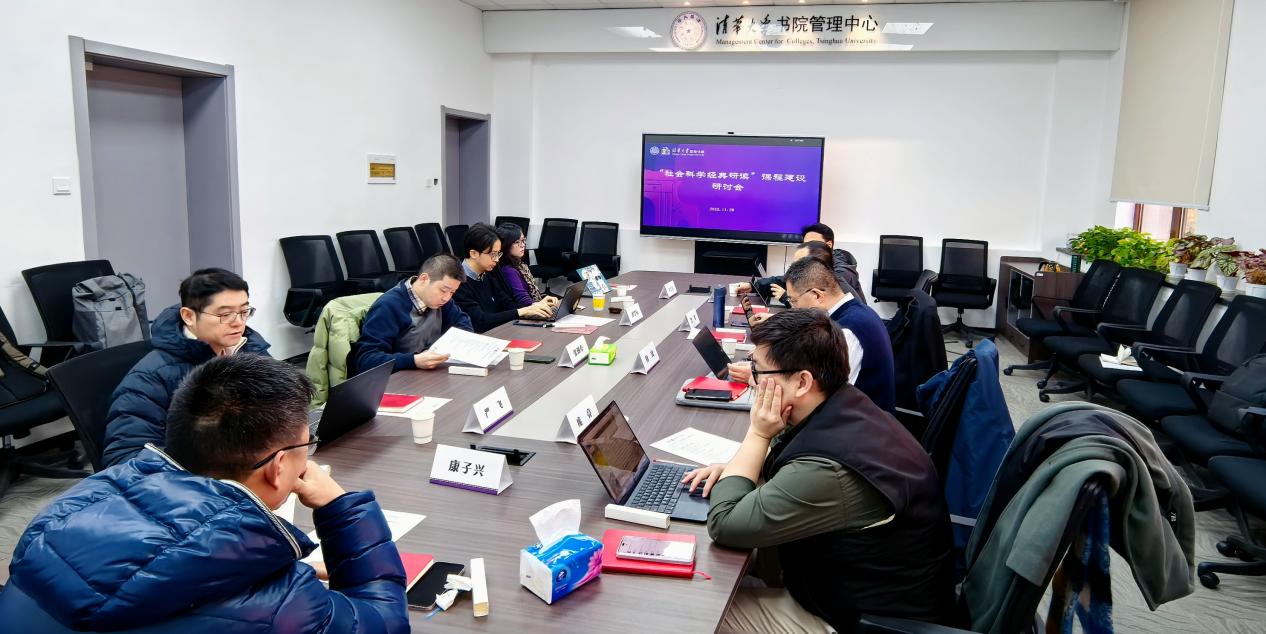
On November 28, Zhishan College of Tsinghua University hosted a colloquium on the development of its “Classical Texts in Social Sciences” course. Experts and scholars from Peking University, Renmin University of China, Beihang University, Zhejiang University, and other institutions were invited to discuss classic text pedagogy and interdisciplinary talent education. Participants had in-depth discussions on course design, teaching methods, practical challenges, and innovative approaches, offering new perspectives for reforming undergraduate social science education within the collegiate system.

Jin’s Opening Remarks
Prof. Jin Jun, Vice Dean of Zhishan College, began the colloquium by introducing it’s background and purpose. To meet the demand for interdisciplinary talents in emerging fields such as digital economy and global governance, the College has been exploring ways to break through traditional disciplinary boundaries. It has established 13 interdisciplinary training tracks and reintroduced core social science themes by adding the “Classical Texts in Social Sciences” series to its curriculum. This aims to help students build a solid theoretical foundation and enhance their practical insight. However, current challenges, such as the widespread use of AI, heavy academic workloads, and insufficient time for deep reading, pose significant difficulties for course instruction. Therefore, this colloquium was convened to gather suggestions and ideas for advancing course development and talent education.
Scholars’ discussions and exchanges
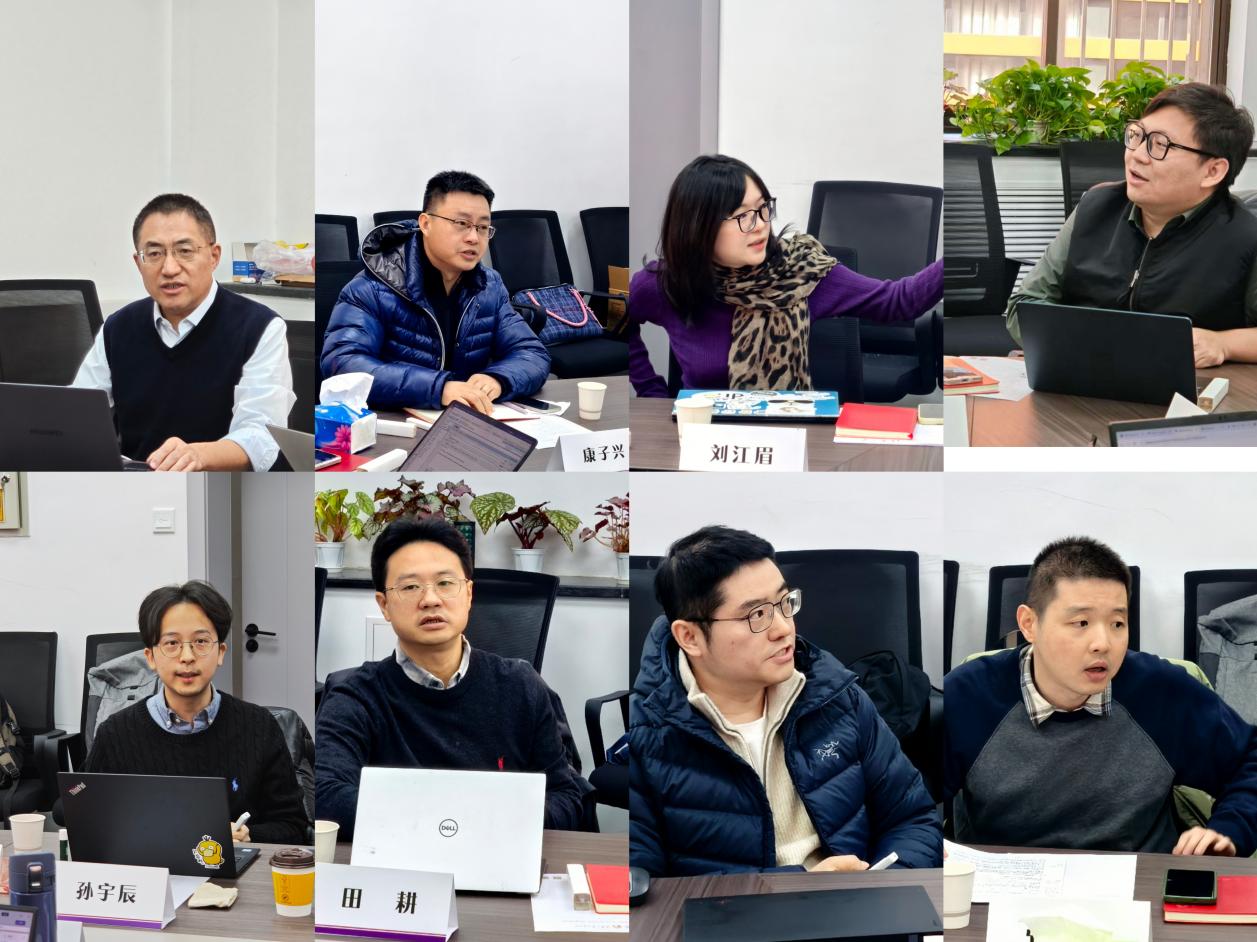
During the discussion session, the scholars exchanged their experiences and ideas on key topics including the course’s position in the curriculum, text selection, teaching methods, and teacher-student interaction, sharing diverse teaching practices and insights.
Prof. A Feng (Tsinghua University) introduced his “Ancient Chinese Contracts” module within Rixin College’s “Classic and Special Seminar on Humanities” series. The course strengthens students’ foundational historical skills through document transcription and source analysis, while also requiring readings from contemporary historical and social science works to broaden students’ theoretical perspectives. Prof. KANG Zixing (Beihang University), drawing on his experience in teaching seminars on Plato’s Republic and Adam Smith’s Wealth of Nations, suggested that classics courses for general education should prioritize fostering interest and avoid excessive complexity, whereas seminars for academic purposes may demand greater student engagement.
Dr. LIU Jiangmei (Zhejiang University), in her “Classics in International Affairs and Global Governance” course, focuses on the theme of “nation-state”. She selects key texts from World War I to the present, uses other materials including films and novels to bridge theory and reality, and organizes special lectures to help students understand academic frontiers. Dr. PANG Liang (Peking University), based on his experience from multiple courses, recommended that classic text seminars concentrate on a small number of works to ensure depth and quality, avoiding superficial coverage. He proposed using small, voluntary reading groups to balance academic rigor with student interest.
Dr. SUN Yuchen (Tsinghua University) is the instructor for the College’s “Classical Texts in Social Sciences (1)” course. He guides students through The Wealth of Nations via contextual restoration, close reading, and assigned exercises. The course highlights connections between classic texts and modern social sciences while providing differentiated guidance for students with varying interests. Prof. TIAN Geng (Peking University) recommended building consensus within departments and academic communities regarding core texts, reading sequences, and teaching methods. He distinguished between general education and research-oriented undergraduate classics courses, suggesting that they target different student groups, serve different functions, and require different teaching arrangements.
Prof. YAN Fei (Tsinghua University) shared his experience in teaching “The History of Sociological Thought (1)” course. Considering changes in times and students, he recommended innovating with assignment formats like theatrical performances, talk shows, and AI-generated comics to enhance course interactivity and engagement, actively responding to challenges posed by AI in teaching. Prof. ZHANG Weizhuo (Renmin University of China), who taught widely in sociology and anthropology, proposed methods such as comparing Eastern and Western thinkers and integrating humanities electives with long-term reading groups. This approach highlights the connections between theoretical texts and real-life contexts, building a sustainable mechanism for interdisciplinary classic reading.
At the Conference
This colloquium provided an important platform for exchanging ideas on developing social science classics courses in higher education, effectively fostering teaching consensus and pooling practical experience. Zhishan College will incorporate the outcomes of the colloquium to continuously refine its curriculum system and teaching approaches, enhancing the quality of interdisciplinary talent education within the collegiate system.