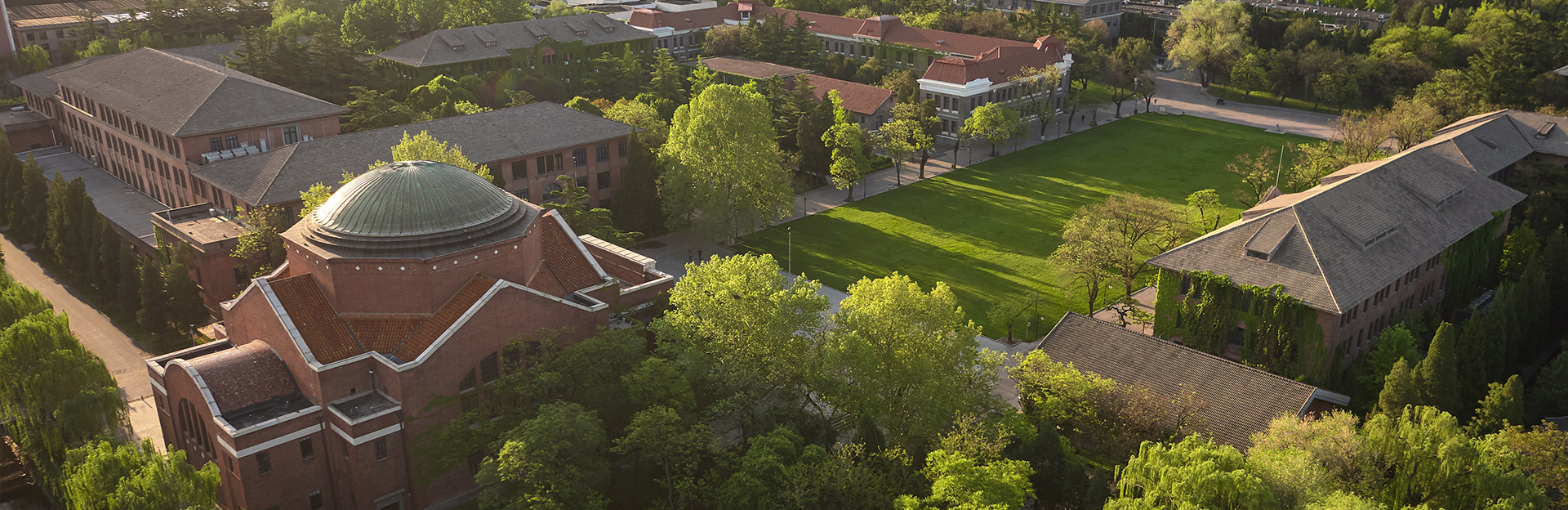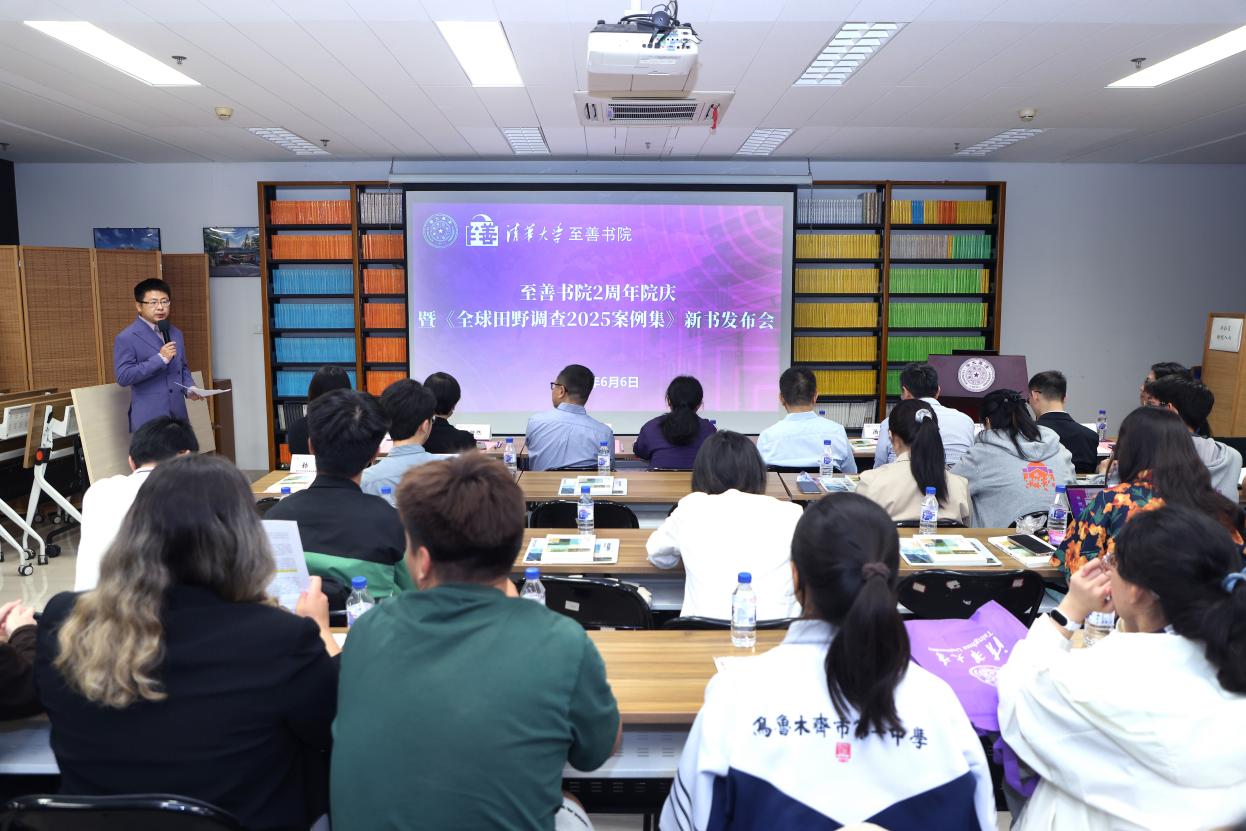
Photo from the Event
On June 6, 2026, Tsinghua University’s Zhishan College held its second‑anniversary celebration and the launch of the 2025 Global Deep Dive Casebook. Attendees included Peng Gang, Standing Committee Member and Vice President of Tsinghua University; Yi Yuanjia, Deputy Director of the Beijing Economic‑Technological Development Area Management Committee; Su Peng, Director of Tsinghua University’s College Administration Center; Yao Yingran, Deputy Editor‑in‑Chief of Shanghai People’s Publishing House; Tang Ke, Dean of Zhishan College; Jin Jun, Vice Dean of Zhishan College; along with other faculty, students, and guests. The event was hosted by Sun Zhen, Head of the Student Affairs Group at Zhishan College, Tsinghua University’s Party Committee.
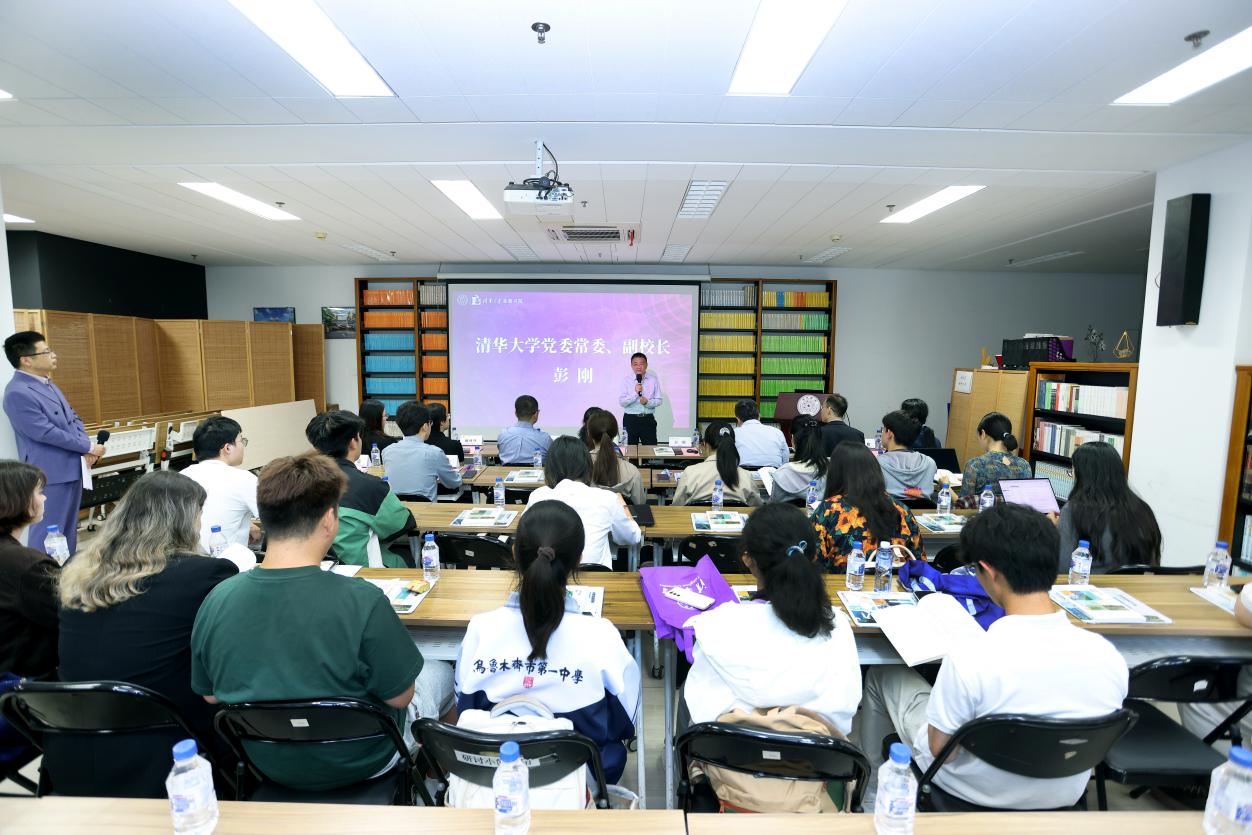
Peng Gang Delivers Remarks
Peng Gang began by thanking all those who have supported Zhishan College over the years. He noted that in the age of AI, while efficiency is valued, the “slow craft” of learning—slowing down, engaging deeply with peers in the real world, and finding inspiration through uncertainty—remains the irreplaceable core of a university education. He stressed that social science research should be “rigorous but never indifferent” — balancing a systematic, scholarly understanding of the world with a genuine commitment to making it better.
Reflecting on the college’s two‑year journey, Tang Ke said that Tsinghua’s college system reform emphasizes cross‑disciplinary and innovative exploration. Zhishan College focuses on social sciences, with Deep Dive fieldwork as its signature educational feature, valuing student interaction and international exchange. To meet the challenges of the digital intelligence era, Zhishan college integrates social science perspectives with AI and data science methods. Through initiatives like the “50101” plan and cross‑disciplinary tracks, it aims to cultivate versatile talents with cutting‑edge vision and social responsibility.
Jin Jun gave a detailed introduction to the Global Deep Dive course and the newly published 2025 Global Deep Dive Casebook. Drawing on the 2025 course experience, he noted that the program has effectively strengthened students’ real‑world understanding, methodological training, theoretical grasp, problem awareness, and team bonds, resulting in a number of high‑quality reports. The casebook selects 11 of them, covering rural society, grassroots governance, globalization, and digital governance — a clear reflection of the college’s commitment to integrating knowledge with action.
Yi Yuanjia said that the Beijing Economic‑Technological Development Area (E‑Town), as a practice base for the college, will continue to support the integration of industry, academia, and research, offering more resources and assistance, and encouraging students to identify new problems and gather fresh cases. Yao Yingran noted that the casebook’s philosophy closely aligns with the publisher’s focus on “global vision, local storytelling, academic depth, and humanistic warmth,” and expressed hope for deeper collaboration in the future.
Wang Xiaowen and Zhao Haiyang, student representatives from the college, shared their deep‑dive fieldwork experiences. They said that stepping out from cities into rural areas, and from China to the world, gaining new knowledge in real‑world settings is an invaluable experience that classroom learning cannot replace — an experience that will profoundly shape their future academic paths and life choices.
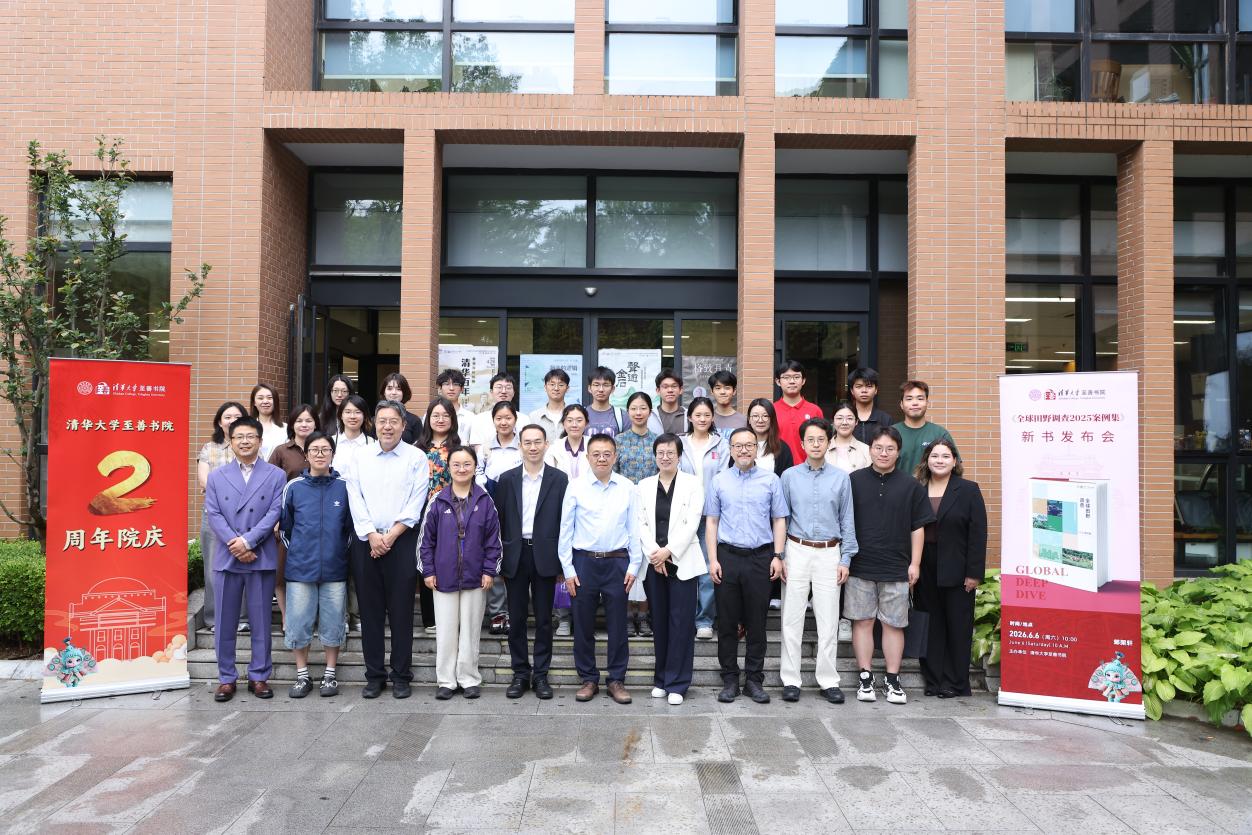
Group Photo of Representatives
The launch event looked back on Zhishan College’s two‑year journey, showcased the early achievements of the Deep Dive fieldwork course, and set a clear direction for future talent cultivation and academic practice. Zhishan College will continue to deepen its educational philosophy of “grounded in social sciences, powered by digital intelligence,” steadily advancing the Global Deep Dive course to develop future leaders in digital society with a Chinese perspective and a global outlook.